

Sensory Herbal Garden
Sensory Herbal Garden
Muskegon , MI 49442
Hours of Operation
Dawn To Dusk
Campus Email:
Office Location
Located outside and between The Stevenson Center and Arts and Music Building
BRIEF HISTORY OF THE GARDEN
The idea for a public herb garden at Muskegon Community College (MCC) was first envisioned by Diana Osborn, Dean of Administrative Services, during the construction of the Muskegon Center for Higher Education in 1994.
Responding to an invitation from the College, the Western Michigan Herb Society designed and created the Sensory Herbal Garden in the Center’s courtyard. The garden was officially dedicated on July 18, 1995.
Over time, the Herb Society disbanded, and the garden gradually became overgrown and underutilized. Many of the original herbs and plantings were lost.
In 2025, two MCC employees who had helped establish the garden in 1994-1995 led a fundraising campaign to restore and revitalize the space for future generations of students, faculty, staff, and community members. Their goal was to renew the original vision: providing herbs and learning opportunities for all.
The revitalized garden, featuring an upgraded barrier-free pathway, was designed by Lynn Bryant, owner and founder of Lovage Garden Company. Today, the garden showcases more than 65 varieties of herbs and plants for visitors to enjoy. Lynn also reestablished the West Michigan Herb Society, which, together with the MCC Garden Club students, will help care for and sustain the garden for years to come.
The Sensory Herbal Garden is a place for everyone to relax, learn, explore, and engage the senses while enjoying the beauty and benefits of herbs and plants.
PURPOSE OF A SENSORY HERBAL GARDEN FOR ALL
A sensory garden brings plants and their unique features within reach of visitors to explore and experience the beauty of plants up close. Designed to be barrier-free and accessible to everyone, the garden offers opportunities to touch, smell, see, listen, and learn about herbs and plants and the unique qualities they have to offer. Whether seeking a moment of relaxation, a spark of inspiration, or a deeper appreciation of nature, every visitor can enjoy a welcoming space where people and plants can connect.
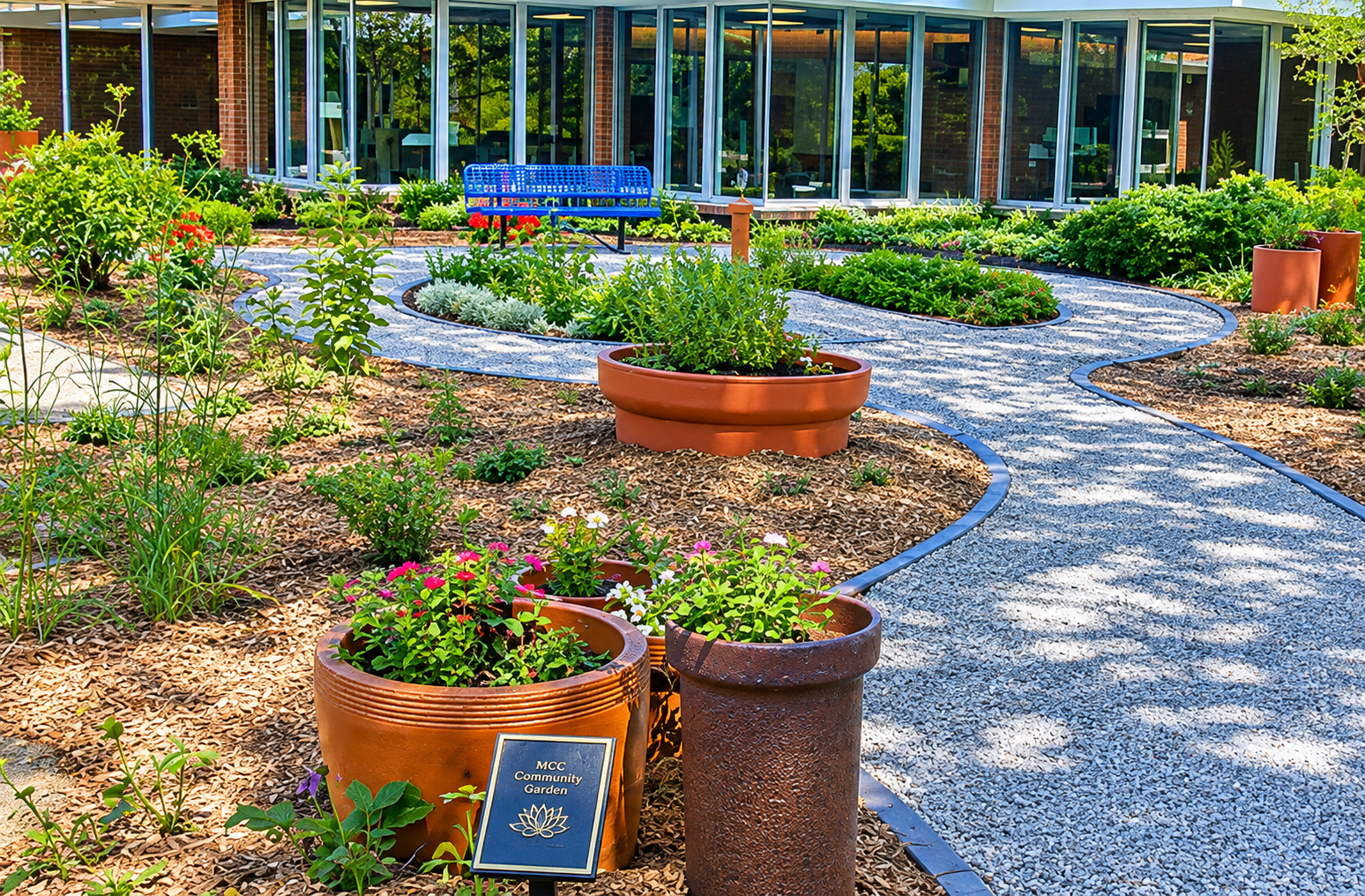
Comfortable seating throughout the garden provides students, faculty, staff, and community members a place to pause, observe, and interact with their surroundings. Paths of hard-packed gravel offer a stable yet permeable surface that is easily accessible for both walking and rolling.
The courtyard garden creates a microclimate similar to USDA Hardiness Zone 7. Protected from high winds and blowing snow by the surrounding buildings and trees, the garden benefits from both direct and reflected warmth from glass and concrete surfaces, which help heat the sandy soil. A variety of mature hardwood trees provide welcome shade overhead.
Plants have been placed close to the pathways and at varying heights to ensure that all visitors can fully experience the garden. Guests are encouraged to touch, pick, taste, and smell the plants. Trees and grasses add auditory interest, while insects and birds attracted by the diverse plantings further enrich the sensory experience.
BENEFITS OF A SENSORY GARDEN
A sensory garden:
Engages the senses – Visitors can touch different textures, smell fragrant herbs, see vibrant colors, and even taste edible plants when appropriate.
Improves mental health – The sights, scents, and sounds of a garden can create a calming atmosphere and provide a peaceful place to relax.
Encourages healthy eating habits – Growing and learning about herbs can inspire people to incorporate fresh plants and gardening into their everyday lives.
Creates a sense of place and belonging – Most importantly, a sensory garden can offer a welcoming space where people feel comfortable exploring, connecting, and enjoying nature.
EXPLORE AND EXPERIENCE THE SENSORY HERBAL GARDEN
Color – MCC’s blue and gold color theme has been repeated throughout the garden, reflecting the Jayhawk student and staff spirit. Of course, additional colors of leaves, grasses, and flowers are also present.
Touch – The sensory garden invites visitors to explore with their hands. Feel the velvety leaves of the Lamb’s Ear or touch the prickly cone of the Echinacea flower. Run your hand along the silky Silver Mound Artemesia or bat at the purple flower heads of the chive plants. Tree bark contributes additional surfaces full of texture to enjoy.
Pattern and Shape – The repeating circular shapes of the terra cotta planters and the garden itself, the diamond pattern of the benches, and the umbral, spire, globe and tulip patterns of the orbs in the garden are great representations of the many patterns and shapes the garden has to offer.
Sound – Enjoy the many sounds of the garden. Ceramic wind chimes, acorns hitting the metal roof of the school, grasses rustling, birds and insects, and leaves blowing along the sidewalk play their own seasonal melody.
Smell – The majority of the plants in the Sensory Garden are culinary or medicinal herbs. Herbs are famous for the strong smells made by the natural oils inside their leaves and stems. Common scent profiles include mint, citrus, earthy, lemon, licorice, and floral. Plucking a leaf, or a flower petal and crushing it with your fingers will release a wild array of scents, both familiar and surprising.
Taste – An herb garden, especially a culinary herb garden, engages the sense of taste through a diverse spectrum of natural oils and aromatic elements. Some herbs taste cool and refreshing, sharp and savory, or pungent and zesty.